

Individual Therapy
It all starts with finding the intersection of three areas: trauma, attachment, and identity.
My Approach
I focus on three areas in my work with adults and kids ages 12 and up:
Trauma. What happened to you? Was it one acute event, or a lifetime of day-to-day experiences? How have you seen these things impact you?
Attachment theory. How do you relate to other people? To your environment? To yourself? What is your place in the world, and how did you learn that?
Identity. What is your identity, and how did it form? What do you want your identity to be moving forward? How can we help you realize that identity?
I integrate these main concepts (along with others) to facilitate healing and empowerment in your life.
Most important, though, is that you’re in control of what we cover in therapy. If you want to go deep in the processing, we can. If you want to leave some things alone, we will. If you want to talk about your latest favorite TV show/movie/book/pet/etc., then I’m so excited to hear about it!
All of it belongs.
*Note: Some services fall outside my scope of practice. I do not provide custody evaluation recommendations, medication or prescription recommendations, psychological evaluations, SSDI (disability) benefits, or legal counsel/advice.
My focus areas:
Trauma and C-PTSD
Chronic illness
LGBTQ+ / Queer issues
Neurodivergence / ADHD + Autism
Sexual Abuse
Burnout
Anxiety
Depression
My modalities:
Trauma Focused
Attachment-based
Person-centered
Culturally Sensitive
Motivational Interviewing
Multicultural
Cognitive Behavioral Therapy (CBT)
Dialectical Behavior Therapy (DBT)
What can I expect?
You know the basics of my approach to therapy, and now it’s time to get to the logistics. As someone navigating chronic illness myself, I know the logistics are often where pretty words about “accessibility” fall apart, so I want to be really clear.
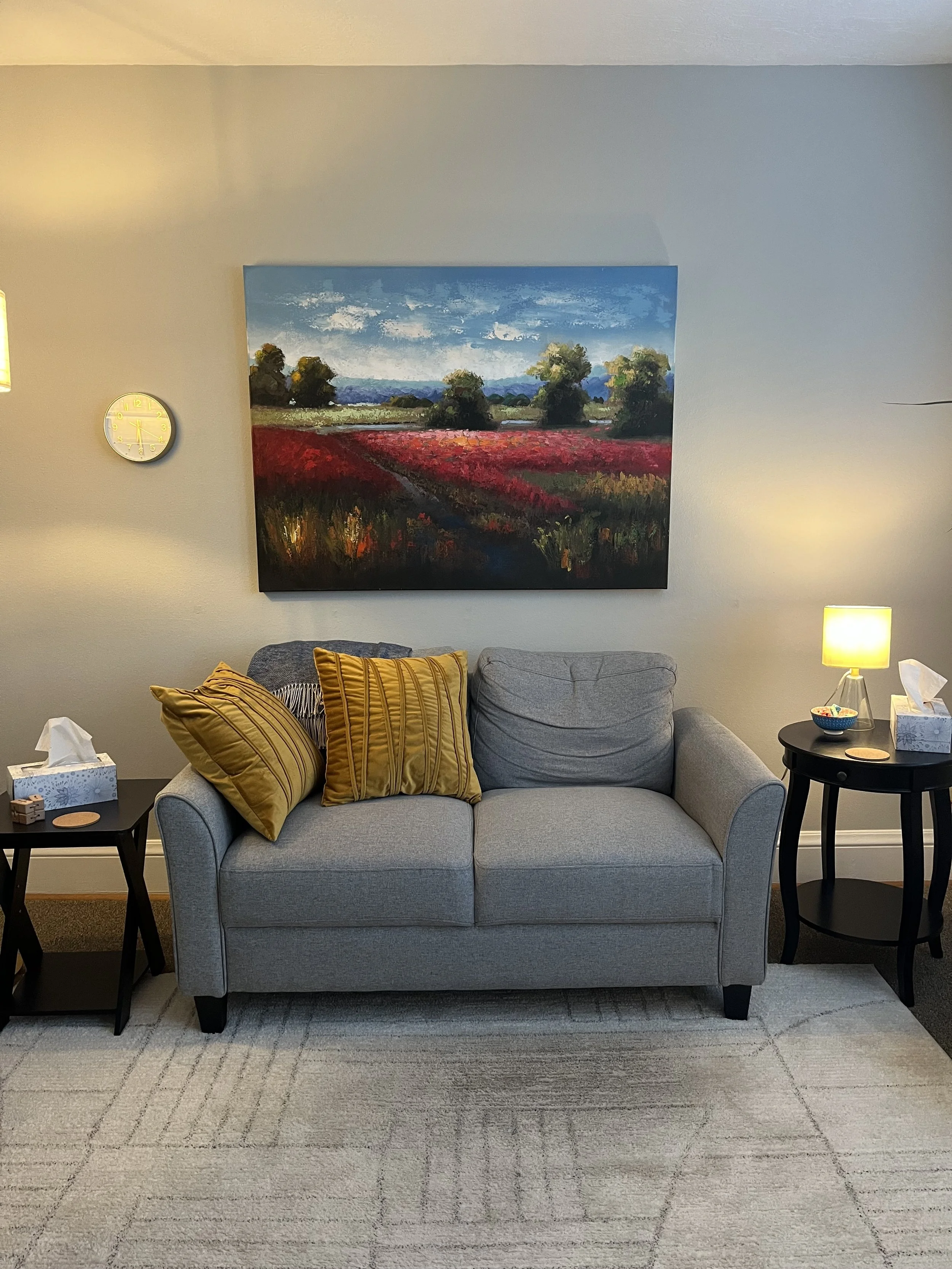
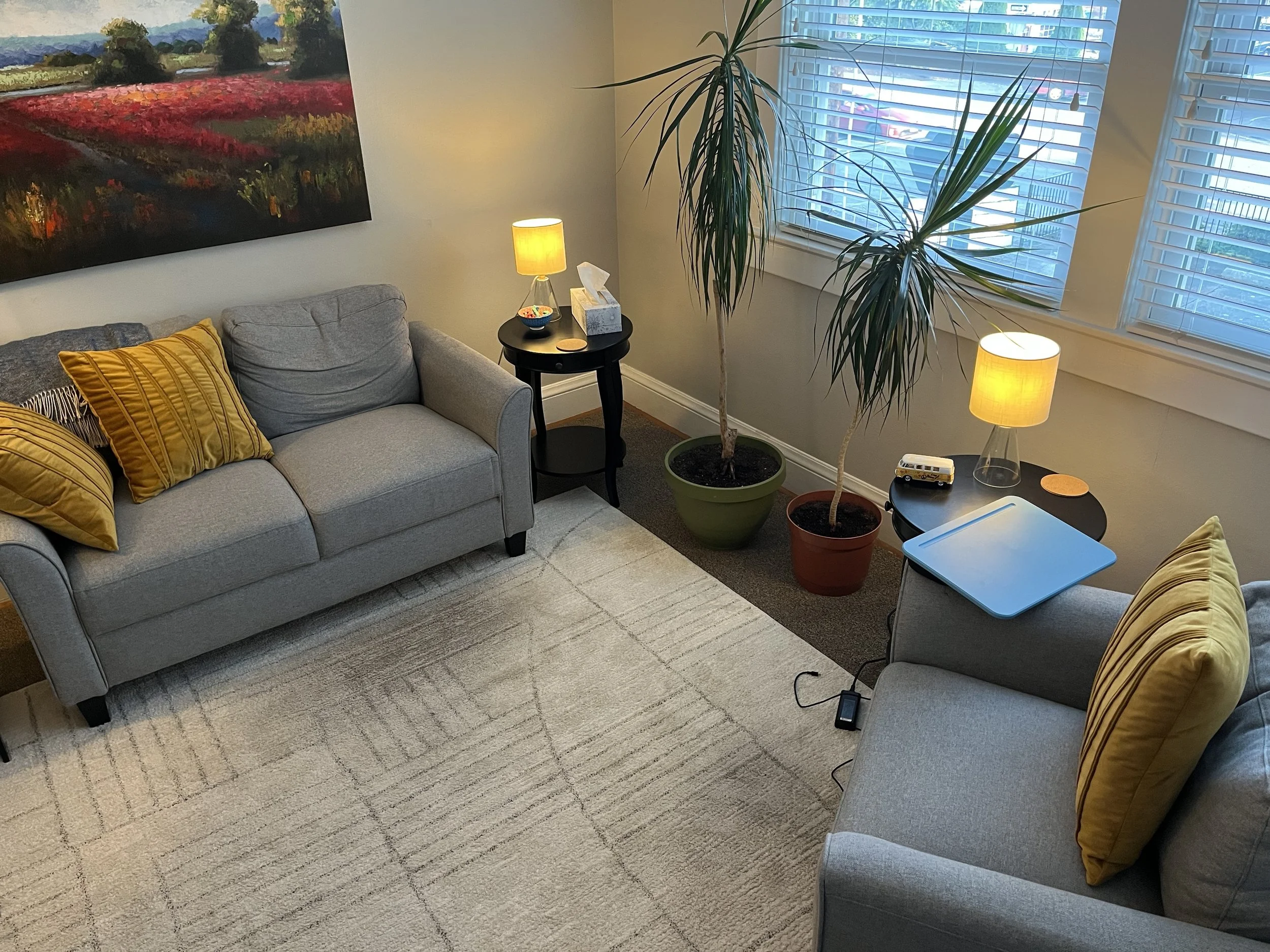
Most of my sessions are telehealth, which means our sessions will be happening over video, and you’ll need a computer capable of both audio and video feed and internet strong enough to maintain the connection. On Fridays, I see people in-person in my office in Newberg. Hybrid is an option too! If you want some in-person but need the flexibility of video, we can figure something out. My in-person office is, unfortunately, not ADA-accessible, and I hold sessions at the Chehalem Cultural Center when I meet with anyone who needs full ADA accessibility.
When you reach out to begin therapy, we’ll have a 15-20 minute consultation call free of charge. You’ll tell me about what you’re looking for from therapy, and I’ll tell you more about my practice. If we decide we’re a good fit for each other, we’ll schedule a first session. Generally, I recommend clients begin with weekly sessions, and we can discuss if going down in frequency makes sense for you after the first month. I’ll schedule our first 4 visits during that initial meeting. Most clients find some improvement in symptoms within that time, and that’ll help us decide what your needs are from there.
I’m not going to give you “therapy homework,” but I’m also not expecting you to just go out and cope in-between sessions. We use our time together to explore and examine what happens outside of therapy, and look for ways to help you work towards your treatment goals in your day to day. If you’re someone who wants the structure of weekly goals, then we can do that! And if you’re sick of people telling you to journal, let’s find something different that works for you.
You don’t have to have your life all in order to work on your mental health goals, but we also want to make sure you’re experiencing enough stability to safely engage in deeper work. We’ll work together to balance finding you tools and resources for immediate relief, and putting in deeper work for long-term change.
Everyone needs something different from therapy, and I want to find what you need. My job is to provide the best therapy for you the individual, not to make you fit into a standard mode of treatment.
A note on cancellations
I listen to and honor the needs and limits of my chronically ill body, and I invite my clients to participate in that work as well. Part of how I navigate that is through a more flexible approach to scheduling. I waive late cancellation fees as long as we can reschedule our appointment within 5 business days of our originally planned meeting. And if I have to cancel a session, your next session will be half the price you normally pay.